I stood outside our club advisor's room while Narjis apologized for an event I had failed to organize.
To explain how I ended up there, I need to go back to the department I first joined at the Robotics Club of BRAC University.
Those earlier stories focused mostly on robots. This one is about how I moved through the Robotics Club of BRAC University, usually called ROBU, before I finally settled into R&D.
I joined ROBU as a graphic designer because Adobe Photoshop and Illustrator were the skills I could offer. I also knew HTML, CSS, and PHP, but web development was only occasionally useful inside the club.
One exception was an RFID-based entrance system that BM Abir, the club president then, had built for the club room. It included a small web interface for managing members and access cards, and I helped briefly when it needed changes. Still, Creative was where I had joined, and it already had designers who were better than me.
After some time, I told Narjis and Abir that Creative might not be the right department for me. I wanted to explore Events instead. They let me move.
Planning was not execution
Events had two sides. One group planned activities, schedules, speakers, and programs. The other handled logistics: arranging rooms, carrying chairs and tables, collecting projectors, decorating spaces, and transporting robots and equipment.
I wanted to experience both. I was never trying to become a director or take charge of the department. I remained a regular member, helping wherever I could and learning how events were organized.
Then I was given responsibility for a school visit at BAF Shaheen School in Dhaka. ROBU often visited schools to show students what we had built and make robotics feel less distant. Depending on what was available, we brought projects such as WALL-E, Chondrobot, and Mongol-Tori. WALL-E was the friendly exhibition robot, while Chondrobot and Mongol-Tori represented the club’s more ambitious work around lunar mining and Mars rover competitions. This event had more than a thousand students from classes six and seven gathered in an auditorium.
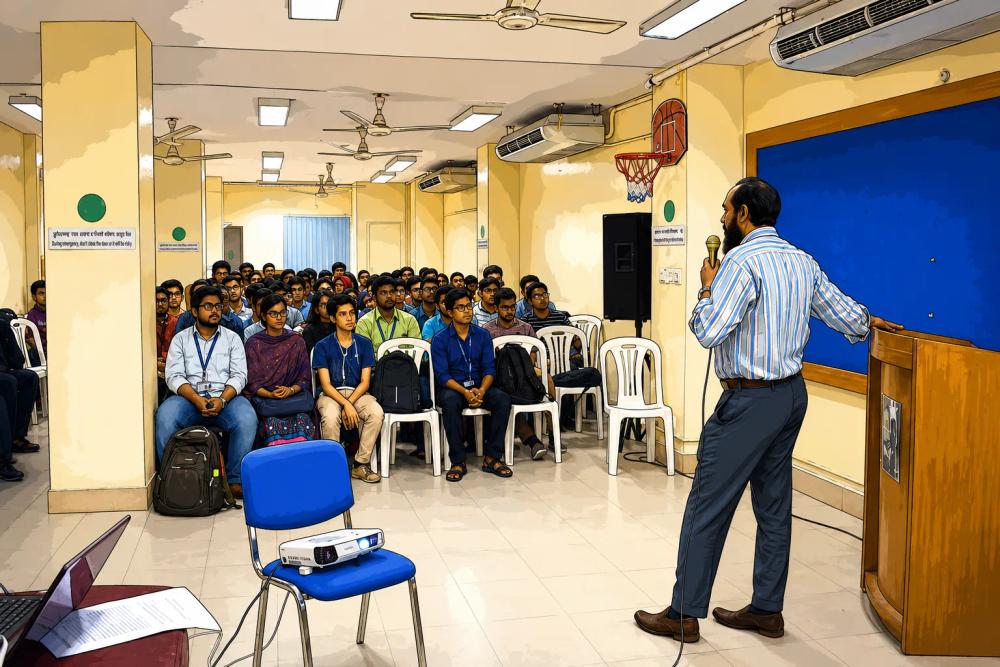
I had made the plan and promised Narjis that I would manage the event. We had selected the robots and prepared the team. Then the execution fell apart.
We arrived late, and the robots arrived late with us. By then, some students were already leaving. More than a thousand students had been gathered in the auditorium, and once the timing collapsed, they became difficult to control. The speakers were not properly coordinated, the presentation sequence stopped making sense, and there was chaos everywhere. I had planned the event on paper, but I had not planned carefully enough for what would happen when the real event moved away from that plan.
The event was my responsibility, even though Narjis was the person officially accountable for the team.
I stood outside while he expressed how disappointed he was. Narjis apologized. She did not tell him that I had planned it. She did not mention my name or try to move the blame away from herself.
When she came out, I told her she should have said it was my mistake. She simply told me it was okay and that I would do better next time.
I did. After that, I helped organize many more events, and I never repeated that mistake. I learned that planning and execution were not the same skill. A good plan still needed clear responsibilities, timing, coordination, and someone watching what was actually happening.
Finding a problem in recruitment
After that failure, I started paying more attention to the systems behind recurring club work. Events had shown me how quickly execution could collapse when responsibilities and information were unclear. Recruitment had a different problem, but it came from the same kind of friction: too many manual steps and too little structure.
Every semester, BRAC University held a club fair where students explored different clubs and signed up for the ones that interested them. ROBU used paper forms.
Students wrote down their names and contact details. Later, the HR team had to sort the forms, transfer the information into spreadsheets, contact applicants, schedule interviews, assign interviewers, and record feedback. The interviews were not difficult, but the process around them was unnecessarily difficult.
At the time, I was learning Laravel out of curiosity. I suggested replacing the paperwork with an online recruitment portal, and the club challenged me to finish it before the club fair, roughly two or three weeks away. It was the first time my web-development skills became genuinely useful to ROBU.
I built a simple system where students could register through a link or QR code. We also kept a laptop at the booth for anyone who wanted to sign up there.
The first form collected only basic information. After registering, applicants received an email with a longer form about their interests, hobbies, and skills.
That follow-up email solved a small but real problem. We gave candy to students who registered at the booth, so some people signed up mainly for the candy. Completing the second form showed that someone was interested enough to continue.
Applicants could select an interview slot, while interviewers marked when they were available. The portal organized the schedules and gave interviewers a structured place to record interests, skills, and suitable departments. We no longer needed loose papers or unstructured spreadsheet comments.
It was not a corporate hiring system. We were not rejecting students because they lacked experience. It was simply a more organized way to understand who they were and where they might enjoy contributing.
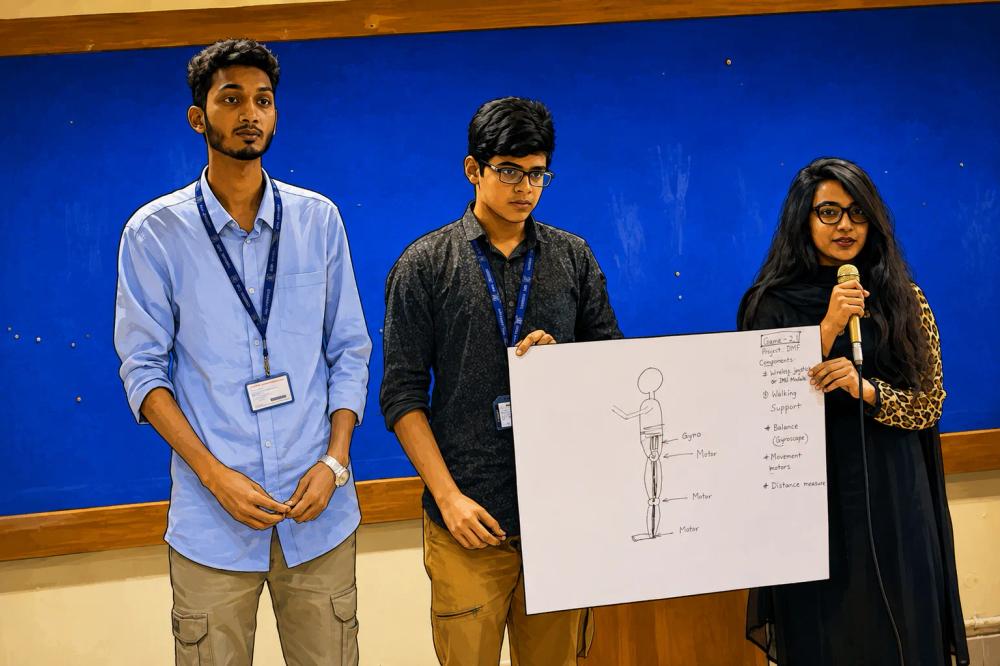
The portal was used for several semesters. Later, Rafat Hussain built a much better version. Rafat had joined through one of our workshops and quickly stood out as an unusually capable member. He was strong in graphic design, web development, and electronics, and his team won a club competition in his first semester. His version improved what I had started, which was exactly how work inside a student club should continue.
Understanding the whole club
I began in Creative, worked with Events and Logistics, contributed to HR through software, taught workshops, and eventually settled into R&D.
That journey showed me how presentation, planning, logistics, recruitment, and technical work depended on one another.
A robotics club was not run only by the people writing code or connecting motors. It also depended on people designing posters, booking rooms, carrying equipment, calling applicants, preparing schedules, and staying behind after an event to put everything back.
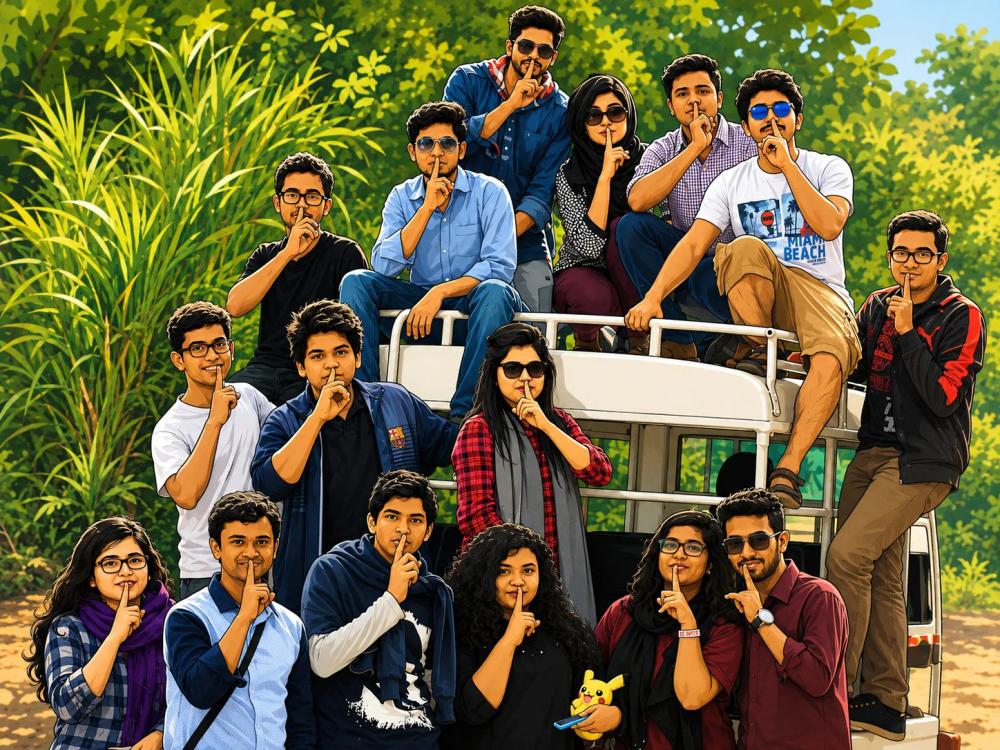
Narjis and Abir gave me the freedom to move between those roles. They did not insist that I stay inside the department I originally joined. They let me explore, make mistakes, solve problems, and contribute wherever I found something interesting.
I joined ROBU as a graphic designer. By the time I settled into R&D, I understood much more than how to build a robot. I understood how the club around those robots worked.