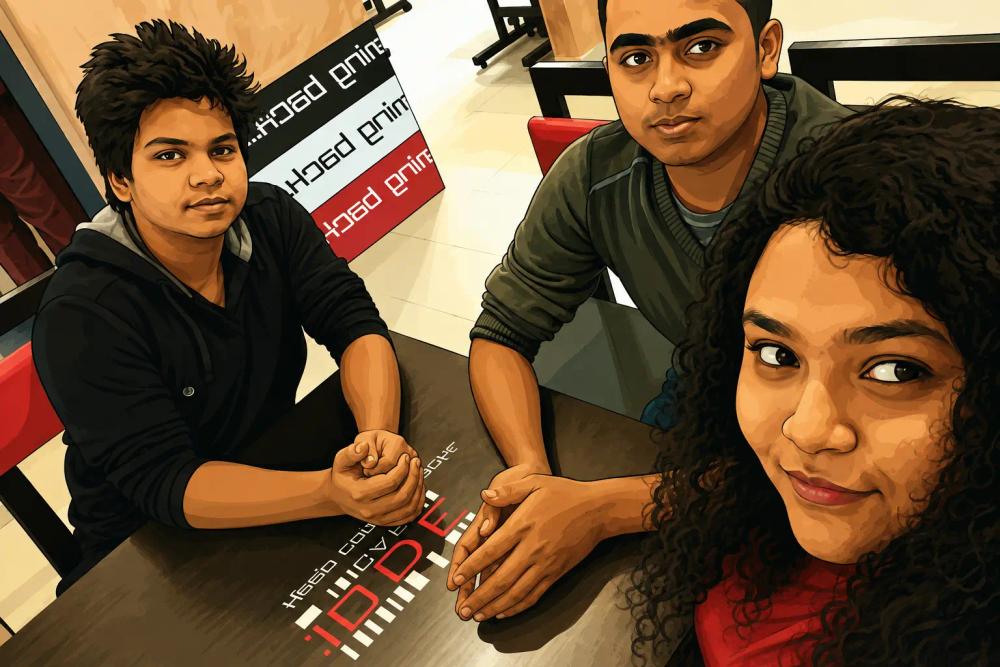
Looking back, it is surprising how much of my life can be traced back to a free robotics workshop. It was where I truly started building robots, where I learned to teach, and where I met three of the closest friends I would make at university. At the time, though, I had no idea any of that was about to happen. I was simply a first-year student looking for a way into robotics.
During my first semester at BRAC University, I joined the Robotics Club. I had seen robots built by alumni and wanted to be part of that world.
I did not join as someone who could build robots. I joined because the club needed graphic designers, and that was the only skill I could confidently offer. I designed things for the club and watched other students work on robots, but I had no idea how to join the technical side.
For the next couple of years, I did almost no robotics. I became more active in the Film Club, where I worked on poster designs and audio editing. I was technically a member of the Robotics Club, but robotics remained something I watched other people do.
The problem was access
Most robotics workshops I saw cost between BDT 5,000 and BDT 10,000, and that usually did not include the components. That was expensive for me. I was earning some money through freelancing and also getting support from home, but spending that much just to find out whether I liked robotics did not feel reasonable.
Robotics was also an expensive hobby after the workshop ended. Components could be damaged, and replacing them was not cheap.
During that period, I made one attempt to move closer to the technical side.
Sakib Ahmed was from my batch in EEE. I had met him during our first semester as another student and casual friend. When I later learned that he was involved in robotics, joining his competition team felt like a possible way into the technical side of the club.
I joined Sakib and another friend who regularly attended robotics competitions around Bangladesh. I contributed money to the team, but I barely touched the hardware because the components were expensive and nobody wanted a beginner to damage them. I understood why they were careful. Still, I had joined because I wanted to build, and contributing money while watching from the side left me almost as far from robotics as before.
The free workshop
Then, around 2016, I saw a workshop advertisement with one word that immediately caught my attention.
Free.
The workshop was organized by Shaifur Rahman Hirok, who was one batch senior to me in CSE. He owned a robotics-parts company and was one of the most active builders around the university. He had been working with electronics and robotics since childhood, and he built robots both for university projects and for work outside the university.
The classes were free. We only had to buy the components, which cost around BDT 2,000, and we would leave with a box of parts that we could continue experimenting with afterward.
Hirok also did not force anyone to buy from him. He shared the full component list, and although he sold robotics components through his own business, everyone was free to buy them elsewhere.
Learning beyond the syllabus
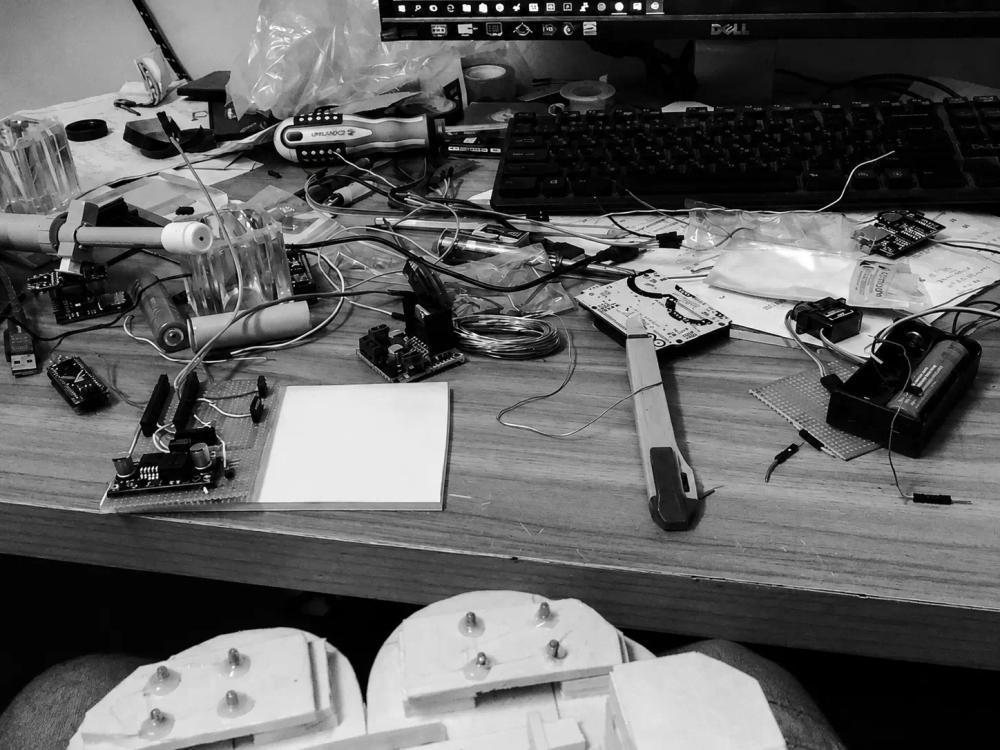
After only one or two classes, I started experimenting far beyond the syllabus. I connected LCDs, LEDs, buttons, buzzers, infrared sensors, and other modules, then posted photos and videos of them on Facebook.
Hirok noticed.
The free classes got me through the door. What changed everything afterward was access. Hirok started giving me newly imported components and trusted me to figure them out. My job was to interface them, write sample code, and hand everything back so customers would have working examples.
That gave my experiments a purpose. I was no longer learning only for myself. Someone else needed the code to work so another person could use the component.
Every unfamiliar component became a puzzle. Reading documentation, trying things that failed, and finally making them work became addictive.
I also started helping with small paid student projects and, before long, I was spending part of each workshop helping other participants debug circuits and understand their code.
Not long after that, Hirok encouraged me to build a line follower. We entered a competition with a sensor array he had designed himself.
We failed.
But for the first time, I had built something that moved in the real world. Even the failure felt exciting because the machine had existed outside my screen, and I had helped make it.
From student to teacher
After the workshop, I thanked Hirok for making it free.
I told him that I probably would never have joined if the classes had cost several thousand taka, and that there were probably many other students like me.
By then, helping other participants had already become a regular part of the workshops. Teaching felt like the next step, even though we were still learning ourselves.
Then I suggested that Sakib and I should also start teaching.
Hirok smiled and said we were not ready.
I do not remember the exact wording, but my answer was essentially:
"Maybe we'll never be ready. Let's start now."
Instead of one large batch, we split the workshop into several small groups so everyone could get hands-on time with the hardware.
What began as one attempt at teaching became a continuous part of my university life. I kept running workshops almost until graduation. By the time I was finishing university, many of the students involved in robotics had passed through one of the workshops we ran.
That was how I went from attending a free robotics workshop to teaching one. The workshop did not make me an expert. It gave me access, responsibility, and people who trusted me to build, teach, and take ownership before I felt completely ready.
Around the same time, I became more active in the Robotics Club and started working with Narjis Mostofa. She was one batch senior to me, a senior member of the club, and particularly good at organizing people. I found her intimidating at first.
One of her course projects, WALL-E, would soon pull us into the next stage of the journey. Narjis would also become part of my first trip outside Bangladesh, but that belongs in another story.
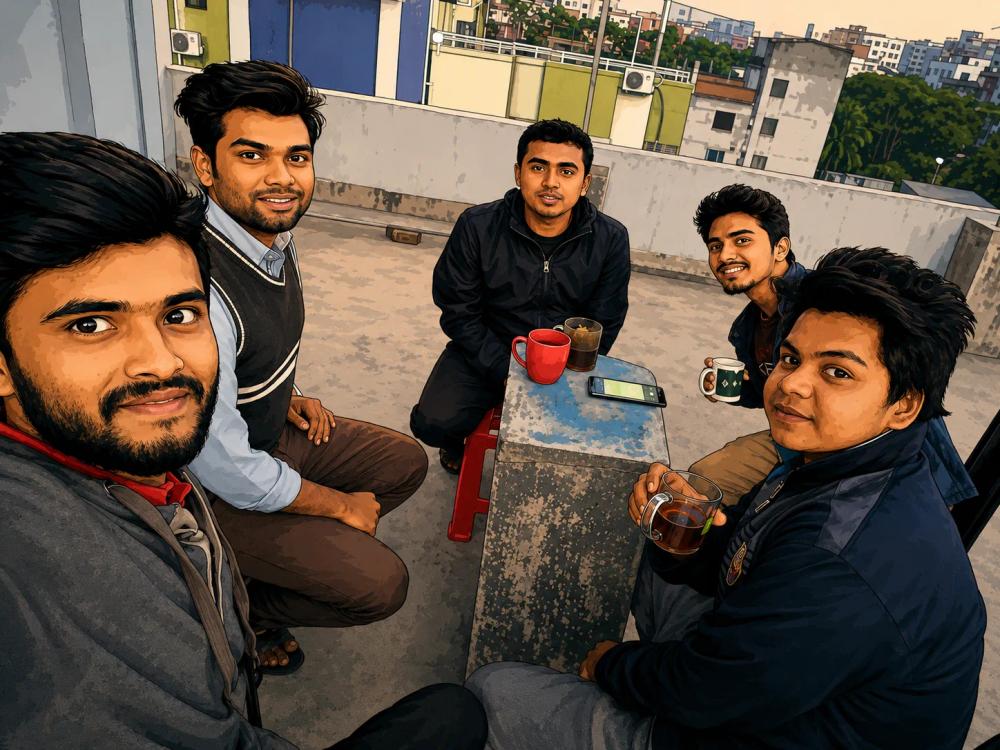
I did not know it then, but Hirok, Sakib, and Narjis would eventually become three of my closest friends from university. Today, our lives are spread across different countries, but we are still part of one another's lives.